Connect with us

Education

10 Proven Critical Thinking Exercises to Sharpen Your Mind

Published

on

10 Proven Critical Thinking Exercises to Sharpen Your Mind

Introduction

In an increasingly fast-paced world overflowing with information, the ability to think clearly and independently is no longer a luxury—it’s essential. That’s where critical thinking exercises come in. These practices help us analyze information, evaluate different viewpoints, and make better decisions in our daily lives, careers, and relationships. Whether you’re a student aiming to improve academic performance, a professional seeking sharper problem-solving abilities, or simply someone who wants to think more intentionally, developing critical thinking is a game changer.

In this article, we’ll explore what critical thinking really means, why it matters, and how specific exercises can help you strengthen your reasoning muscles. You’ll discover practical, real-life examples and engaging activities designed to enhance clarity, logic, and creativity. By the end, you’ll walk away with actionable strategies you can apply immediately—no philosophy degree required.

What Is Critical Thinking?

Critical thinking is the disciplined process of analyzing, evaluating, and synthesizing information to make reasoned judgments. It’s more than just thinking carefully—it’s thinking with purpose and precision. At its core, critical thinking means asking the right questions rather than accepting things at face value.

Will You Check This Article: Adsy.pw/hb3: Smart Short Link for Marketing, Safety, and Growth

Philosophers and educators describe critical thinking as the bridge between raw data and informed action. It involves reflection, logic, open-mindedness, and the courage to challenge assumptions—even your own. In essence, it’s how you turn information into wisdom.

AspectDescription
PurposeTo evaluate information and form sound judgments
Core SkillsAnalysis, inference, reasoning, reflection, and evaluation
OutcomeBetter decisions, problem-solving, and understanding
Who BenefitsStudents, managers, educators, creatives, and lifelong learners

Why Critical Thinking Matters in Everyday Life

Imagine you’re reading an online article about a health supplement claiming miraculous results. Without critical thinking, you might accept the claim at face value. But when you engage your analytical mind—ask questions, check sources, and weigh evidence—you’re thinking critically. You separate fact from fiction and make a well-informed decision.

Critical thinking improves every part of life—from choosing what career path to follow to resolving conflicts intelligently. It makes you less reactive, more proactive, and more aware of your biases. Over time, it transforms how you approach problems, communicate ideas, and interpret the world.

The Science Behind Critical Thinking

Psychologists often compare the brain to a muscle—it grows stronger with deliberate use. Neuroscientific research shows that engaging regularly in critical thinking exercises enhances neural connections in areas related to reasoning, memory, and emotional regulation. In short, these practices literally rewire your brain for more rational thought.

Key FindingSourcePractical Insight
Frequent analytical problem-solving improves decision-making accuracy by 25%Journal of Applied Cognitive Studies, 2022Regular mental challenges strengthen logic and clarity
Reflection-based exercises enhance cognitive flexibility and empathyCognitive Psychology Review, 2021Balancing logic with emotional insight leads to better teamwork

Critical thinking sharpens your ability to pause before reacting, consider multiple perspectives, and make thoughtful choices. It trains you to examine your thought patterns and adopt growth-oriented habits.

The Foundation of Effective Critical Thinking

To master critical thinking, you need to understand its building blocks. These include curiosity, skepticism, open-mindedness, and self-awareness.

  • Curiosity pushes you to explore “why” and “how,” rather than just “what.”
  • Skepticism ensures you look for evidence before accepting claims.
  • Open-mindedness helps you consider perspectives that differ from your own.
  • Self-awareness lets you recognize biases influencing your decisions.

Think of these traits as the “mental posture” required to perform every exercise effectively.

Top 10 Critical Thinking Exercises to Try

1. The Socratic Questioning Method

Named after the ancient philosopher Socrates, this technique involves challenging assumptions through guided inquiry. Ask yourself:

  • What evidence supports this belief?
  • Could there be another explanation?
  • How would someone who disagrees respond?

This exercise encourages structured skepticism, fostering deeper understanding rather than passive acceptance.

2. The “What If” Scenario Drill

This exercise helps you anticipate outcomes by imagining alternate realities. For example, what if your company suddenly doubled its customer base overnight? How would you handle logistics, communication, and quality control? Thinking through hypothetical possibilities fine-tunes strategic reasoning.

3. Mind Mapping Complex Ideas

Create a visual diagram connecting ideas, causes, and effects. A mind map helps you identify relationships that linear thinking may overlook. It’s especially helpful for students, writers, or planners trying to grasp complex systems.

4. The Reverse Thinking Technique

Here, you flip the problem upside down. Instead of asking, “How can I increase productivity?” ask, “How could I reduce productivity?” This method reveals hidden obstacles and overlooked patterns by viewing challenges from a new angle.

5. The Evidence Table Method

Construct a table separating assumptions from verified facts.

Claim or BeliefSupporting EvidenceContradictory EvidenceFinal Judgment
“Remote teams are less productive”Surveys showing fewer in-office hoursData showing increased output due to flexibilityContext-dependent outcome

Seeing data visually helps you make logical decisions free from emotional bias.

6. The Decision-Matrix Challenge

When faced with multiple choices, rank options based on weighted criteria such as cost, time, and impact. Then, review your matrix to see which decision objectively fits your goal best. It’s a powerful tool for professionals and entrepreneurs alike.

7. Deconstruct the News

Pick a recent headline and evaluate it from multiple perspectives. Who published it? What agenda might they have? Does the evidence align with the claim? This trains your mind to separate facts from narrative and identify hidden biases.

8. The Red Team vs. Blue Team Game

Used by the military and major companies, this method divides participants into two groups—one proposing an idea, the other critiquing it. It reveals weaknesses, anticipates counterarguments, and encourages collaborative problem-solving.

9. Pattern Recognition Practice

Train your brain to spot trends or causal links in everyday life. For instance, observe consumer behaviors, traffic patterns, or even emotional reactions during meetings. Over time, you’ll recognize how small details connect to larger systems.

10. Reflection Journaling

Spend 10 minutes daily analyzing decisions you made. Ask yourself what you did well, what you could improve, and what influenced your choices. This habit builds meta-cognition—the ability to think about your own thinking—which is vital for lasting improvement.

Applying Critical Thinking in Real Life

Whether at work, school, or home, the power of critical thinking extends beyond intellectual debate. At work, it leads to better project planning and fewer impulsive decisions. In education, it boosts comprehension and creativity. In personal life, it improves communication, empathy, and emotional intelligence.

For instance, leaders who use critical thinking exercises during meetings tend to foster more innovative ideas and reduce groupthink. Likewise, parents teaching children these methods help them become more confident problem solvers.

How to Integrate These Exercises Into Your Routine

To see real change, consistency is key. Start with 15–20 minutes daily. Rotate between exercises to keep your brain engaged from different angles. Pair reflective writing with scenario-based drills for a balanced practice. Over time, these habits become second nature—your mind automatically begins evaluating, questioning, and reasoning more deeply.

A practical weekly plan might look like this:

DayExercisePurpose
MondaySocratic QuestioningStrengthen logical reasoning
Tuesday“What If” DrillBoost strategic foresight
WednesdayMind MappingEnhance creativity
ThursdayRed vs. Blue TeamBuild teamwork and analysis
FridayReflection JournalDevelop self-awareness

Common Challenges and How to Overcome Them

Developing critical thinking isn’t always easy. Many people struggle with confirmation bias—the tendency to favor information that confirms existing beliefs. Others avoid discomfort when confronting uncertainty.

People also like this: Tech Giants Envision Future Beyond Smartphones: What Comes Next

The key is patience and practice. Allow yourself to sit with ambiguity instead of rushing for conclusions. Over time, your tolerance for complex questions will grow, and so will your intellectual confidence.

Conclusion

Critical thinking isn’t just an academic skill—it’s a lifelong superpower. Practicing critical thinking exercises consistently helps you reason better, communicate clearly, and make wiser decisions in both personal and professional life. By engaging your analytical, creative, and reflective abilities, you cultivate a mind trained for truth rather than convenience.

So, pick one exercise today. Challenge a belief. Reflect on your reasoning. The more you think critically, the more empowered, insightful, and balanced your decisions will become.

Frequently Asked Questions (FAQs)

1. What are critical thinking exercises used for?
They help improve reasoning, decision-making, and analytical skills by training your brain to question assumptions and interpret information logically.

2. Can anyone develop critical thinking skills?
Yes. With consistent practice and self-reflection, anyone can strengthen critical thinking, regardless of age, background, or profession.

3. How often should I practice critical thinking exercises?
Ideally, spend 15–20 minutes a day engaging in one or two exercises. Regularity is more important than duration.

4. What’s the best critical thinking exercise for beginners?
Socratic questioning is a great starting point—it teaches you to think deeply by challenging assumptions and exploring evidence.

5. How long does it take to see improvement?
You’ll notice changes in clarity and judgment within a few weeks, though long-term mastery develops with consistent effort over time.

You May Also Read: Depweekly

Continue Reading
Click to comment

Leave a Reply

Your email address will not be published. Required fields are marked *

Education

How Bukit Timah Tuition Centre Supports Strong Foundations in Core Subjects

Published

on

By

Building a strong academic foundation is one of the most important steps in a student’s learning journey. Core subjects such as English, Mathematics, and Science form the basis for future academic success, and gaps in these areas can affect long-term performance. Many students face challenges not because they lack ability, but because they miss key concepts early on.

As expectations increase across primary levels, parents often seek additional support to reinforce learning. Those considering options like Bukit Timah tuition are usually focused on finding structured programmes that strengthen understanding, improve consistency, and help students build confidence in core subjects. With the right support, students can develop clarity in concepts and perform more effectively in school assessments and national exams.

A well-rounded approach to learning ensures that students not only keep up with their syllabus but also gain the skills needed to excel independently.

Strengthening Core Concepts from the Ground Up

A strong foundation begins with a clear understanding of basic concepts. Without this, students may struggle as topics become more advanced.

Tuition centres focus on reinforcing fundamentals to ensure that students fully understand each topic before moving forward.

  • Break down complex topics into simpler parts
  • Reinforce key concepts through examples
  • Ensure students understand before progressing
  • Address misunderstandings early

This approach helps students build confidence in their knowledge. It also reduces the risk of confusion when they encounter more advanced topics later on.

Personalised Learning for Different Needs

Every student learns at a different pace. Some may grasp concepts quickly, while others need more time and guidance.

Tuition centres provide a more flexible learning environment that caters to individual needs.

  • Adjust teaching pace based on student ability
  • Provide additional support where needed
  • Focus on specific weak areas
  • Offer tailored feedback for improvement

Personalised learning ensures that no student is left behind. It also helps maximise each student’s potential.

Consistent Reinforcement Through Practice

Practice is essential for mastering any subject. Without regular reinforcement, students may forget what they have learned.

Tuition centres provide consistent opportunities for students to practise and apply their knowledge.

  • Regular worksheets and exercises
  • Practice with exam-style questions
  • Immediate correction of mistakes
  • Continuous assessment of progress

This consistent reinforcement strengthens understanding. It also helps students retain information more effectively over time.

Developing Problem-Solving Skills

Core subjects, especially Mathematics and Science, require strong problem-solving abilities. Students need to learn how to apply concepts rather than just memorise them.

Tuition centres focus on developing these skills through structured methods.

  • Teach step-by-step problem-solving techniques
  • Encourage logical thinking
  • Provide challenging questions for practice
  • Guide students in analysing mistakes

Problem-solving skills are essential for academic success. They also help students handle unfamiliar questions with confidence.

Improving Language and Communication Skills

Language plays a key role in all subjects. Strong communication skills help students express their ideas clearly and understand questions better.

Tuition centres help students improve both written and verbal communication.

  • Build vocabulary and sentence structure
  • Improve comprehension skills
  • Encourage clear expression of ideas
  • Practise writing and speaking regularly

Better communication enhances overall academic performance. It also boosts confidence in exams and classroom participation.

Structured Curriculum and Clear Progress Tracking

A structured curriculum ensures that students cover all necessary topics in a logical sequence. This helps maintain consistency in learning.

Tuition centres also track progress to ensure continuous improvement.

  • Follow a well-organised learning plan
  • Conduct regular tests and assessments
  • Provide detailed feedback
  • Adjust lessons based on performance

Tracking progress helps identify strengths and weaknesses. It also allows timely intervention to improve results.

Comparison: Foundation Learning vs Weak Foundation

AspectStrong FoundationWeak Foundation
Concept UnderstandingClear and thoroughConfusing and incomplete
ConfidenceHigh and consistentLow and uncertain
Problem-SolvingLogical and structuredGuesswork and errors
Exam PerformanceStable and improvingInconsistent
Learning ProgressSmooth and steadyStruggles with advanced topics

This comparison highlights the importance of building a strong foundation early. It shows how foundational learning directly impacts long-term success.

Encouraging Discipline and Study Habits

Academic success is not just about knowledge but also about habits. Students need discipline and consistency in their learning approach.

Tuition centres help students develop effective study habits.

  • Create structured study routines
  • Encourage regular revision
  • Set achievable learning goals
  • Promote time management skills

Good habits lead to better performance over time. They also prepare students for future academic challenges.

Boosting Confidence Through Guided Support

Confidence is an important factor in learning. Students who feel supported are more likely to perform well.

Tuition centres provide a positive environment where students can improve without fear.

  • Encourage questions and participation
  • Provide constructive feedback
  • Celebrate progress and achievements
  • Build a growth mindset

Confidence motivates students to keep improving. It also helps them face challenges more effectively.

Long-Term Academic Benefits

Building strong foundations does not only help in immediate exams. It also prepares students for higher levels of education.

Students who develop solid fundamentals are better equipped for future challenges.

  • Easier transition to higher-level topics
  • Improved independent learning skills
  • Stronger academic performance overall
  • Greater confidence in tackling new concepts

Long-term benefits make foundational learning a worthwhile investment. It supports continuous growth and success.

Final Takeaway

Strong foundations in core subjects are essential for long-term academic success. With the right guidance, consistent practice, and structured learning, students can build the skills needed to excel.

A supportive learning environment helps students strengthen their understanding, improve confidence, and achieve better results. At Unitimes Academy, students receive focused support and structured programmes designed to build solid foundations and prepare them for future academic success.

Frequently Asked Questions

1. Why are strong foundations important in core subjects?

Strong foundations help students understand advanced topics more easily. They also improve confidence and ensure consistent academic performance over time.

2. How can tuition help build strong foundations?

Tuition provides structured lessons, personalised guidance, and regular practice. This helps students strengthen concepts and improve understanding effectively.

3. When should students start focusing on foundational learning?

Students should build strong foundations from early primary levels. Early understanding prevents learning gaps and supports long-term academic success.

Continue Reading

Education

Pertadad: Understanding a New Concept Shaping Thought

Published

on

By

Pertadad: Understanding a New Concept Shaping Thought

Introduction

Pertadad is one of those rare words that instantly sparks curiosity. It doesn’t arrive with a fixed definition or a long history. Instead, it invites interpretation, exploration, and meaning-making. In a world filled with established ideas, stands out as a flexible concept—one that adapts to context, intention, and perspective. That’s precisely what makes it valuable.

In this article, you’ll explore what pertadad can represent, how it can be understood across different fields, and why it matters in modern thinking. Rather than forcing a narrow explanation, we’ll unpack as an evolving idea—one that reflects how humans create meaning, navigate uncertainty, and frame new experiences. By the end, you’ll not only understand , but also see how it can be applied in everyday life, creative work, learning, and decision-making.

What Is Pertadad?

At its core, pertadad can be understood as a conceptual placeholder for emerging meaning. It represents ideas that exist before formal definition—thoughts that are sensed, felt, or partially understood, but not yet structured.

Will You Check This Article: Aleksandra Plus: A Modern Platform Redefining Style, Confidence, and Access

Many human experiences begin this way. You feel something is important, but you can’t quite explain why. You recognize a pattern, but lack the language to describe it. lives in that space. It’s not confusion; it’s pre-clarity.

Unlike rigid concepts, pertadad is intentionally open-ended. It allows room for interpretation, growth, and contextual shaping. This makes it especially relevant in times of change, innovation, and learning.

The Origins and Nature of Pertadad

Pertadad doesn’t come from a single discipline, culture, or tradition. Instead, it reflects a broader human tendency: naming the unnamed. Throughout history, people have invented words to capture new realities—emotional states, social shifts, or intellectual breakthroughs.

Pertadad follows this same pattern. It isn’t defined by authority, but by use. Its meaning emerges through interaction, conversation, and reflection. This fluidity is not a weakness; it’s a strength.

Because is not locked into one definition, it can serve as a shared reference point when people sense something new forming but haven’t agreed on its boundaries yet.

Pertadad as a Mental Framework

One of the most useful ways to approach is as a mental framework rather than a fixed idea. It helps people think without prematurely limiting themselves.

When facing a complex situation, there’s often pressure to label, categorize, and conclude quickly. Pertadad encourages the opposite. It allows temporary ambiguity while understanding develops.

This approach supports deeper thinking. Instead of rushing to answers, you stay with the question. Instead of simplifying too early, you observe complexity. Pertadad gives permission to pause.

How Pertadad Shows Up in Everyday Life

You may already be experiencing pertadad without realizing it. It appears in moments like these:

  • When you sense a career change coming but can’t name the direction yet
  • When a creative idea feels powerful but incomplete
  • When a conversation leaves you thinking long after it ends

In each case, pertadad represents potential meaning. It’s the space between awareness and articulation. Recognizing this can reduce frustration and replace it with curiosity.

Pertadad in Creativity and Innovation

Creative work thrives on undefined spaces. Writers, artists, designers, and thinkers often begin with a feeling rather than a plan. captures that early stage of creation.

Instead of forcing clarity too soon, creators who embrace pertadad allow ideas to evolve naturally. This leads to richer outcomes. Many breakthrough innovations begin as vague intuitions that only later become structured solutions.

Pertadad supports experimentation. It allows failure, revision, and reimagining without judgment. In creative environments, that freedom is essential.

Psychological Dimensions of Pertadad

From a psychological perspective, aligns with how the mind processes novelty. Humans don’t instantly understand new experiences. The brain first forms impressions, then patterns, and finally explanations.

Pertadad represents that intermediate cognitive stage. It’s where intuition operates before logic takes over. Ignoring this stage can lead to shallow understanding. Respecting it leads to insight.

People who are comfortable with often show higher tolerance for uncertainty and stronger reflective thinking skills.

Pertadad Across Disciplines

What makes pertadad especially interesting is its cross-disciplinary relevance. It isn’t limited to one field or way of thinking.

In Learning and Education

Students often struggle when they don’t immediately “get” something. reframes that discomfort as a normal and valuable part of learning. Understanding doesn’t appear instantly; it forms gradually.

Recognizing pertadad helps learners stay engaged instead of discouraged.

In Relationships and Communication

Not all emotions are immediately clear. Pertadad can describe those moments when feelings are real but unnamed. Allowing space for that uncertainty leads to more honest communication.

In Decision-Making

Before major decisions, there’s often a phase where options feel unclear. Pertadad helps people resist premature conclusions and instead gather insight.

Key Characteristics of Pertadad

The table below outlines how pertadad differs from fixed concepts:

AspectPertadadFixed Concepts
DefinitionFlexible and evolvingClearly defined
PurposeExploration and sense-makingExplanation and structure
Comfort LevelEmbraces uncertaintyReduces uncertainty
Stage of ThoughtEarly to mid-formationFully formed
AdaptabilityHighLimited

This comparison shows why pertadad plays a unique role in thinking and understanding.

Why Pertadad Matters Today

Modern life moves fast. There’s pressure to have opinions, answers, and clarity immediately. Pertadad pushes back against that pressure.

By valuing the in-between stage of understanding, pertadad encourages depth over speed. It supports thoughtful dialogue instead of reactive responses. In a noisy world, that’s increasingly important.

Pertadad also aligns with personal growth. People change, values evolve, and identities shift. Having a concept that honors transition makes that process healthier and more intentional.

Applying Pertadad Intentionally

You don’t need to fully define pertadad to use it. You simply need to recognize when you’re in a space of emerging understanding.

Here are two simple ways to apply it:

  • When something feels important but unclear, label it as instead of forcing an explanation.
  • Allow time and reflection before demanding certainty from yourself or others.

These small shifts can lead to better decisions, deeper insight, and less unnecessary stress.

Common Misunderstandings About Pertadad

Some people mistake for indecision or vagueness. In reality, it’s neither. Pertadad is active engagement with uncertainty, not avoidance.

Others assume it lacks value because it isn’t measurable. But many meaningful human experiences—trust, intuition, creativity—begin outside measurement.

People also like this: Application Control Engine: The Modern Gatekeeper

Understanding these distinctions helps pertadad be used wisely rather than dismissed.

Conclusion

Pertadad represents a powerful idea: the value of meaning before definition. It honors the early stages of thought, creativity, and understanding that often get overlooked. By embracing pertadad, you allow ideas to breathe, emotions to clarify, and insight to develop naturally.

In a world that rewards quick answers, reminds us that depth takes time. Whether applied to learning, creativity, relationships, or personal growth, it offers a healthier way to engage with complexity. Recognizing pertadad isn’t about staying uncertain forever—it’s about respecting the process that leads to genuine clarity.

Frequently Asked Questions (FAQs)

What does pertadad mean?

Pertadad refers to an emerging or undefined idea that hasn’t yet taken a clear shape. It represents early-stage understanding.

Is pertadad a real or formal concept?

Pertadad is best viewed as a conceptual idea rather than a formal term. Its meaning develops through use and context.

How is pertadad useful in daily life?

It helps people tolerate uncertainty, think more deeply, and avoid rushing into premature conclusions.

Can pertadad apply to creative work?

Yes. Creative processes often begin with vague intuitions, which align perfectly with the idea of pertadad.

Is pertadad the same as confusion?

No. Confusion lacks direction, while involves active exploration toward understanding.

You May Also Read: Depweekly

Continue Reading

Education

Homeworkify: Honest Guide to This AI Homework Helper

Published

on

By

Homeworkify: Honest Guide to This AI Homework Helper

Introduction

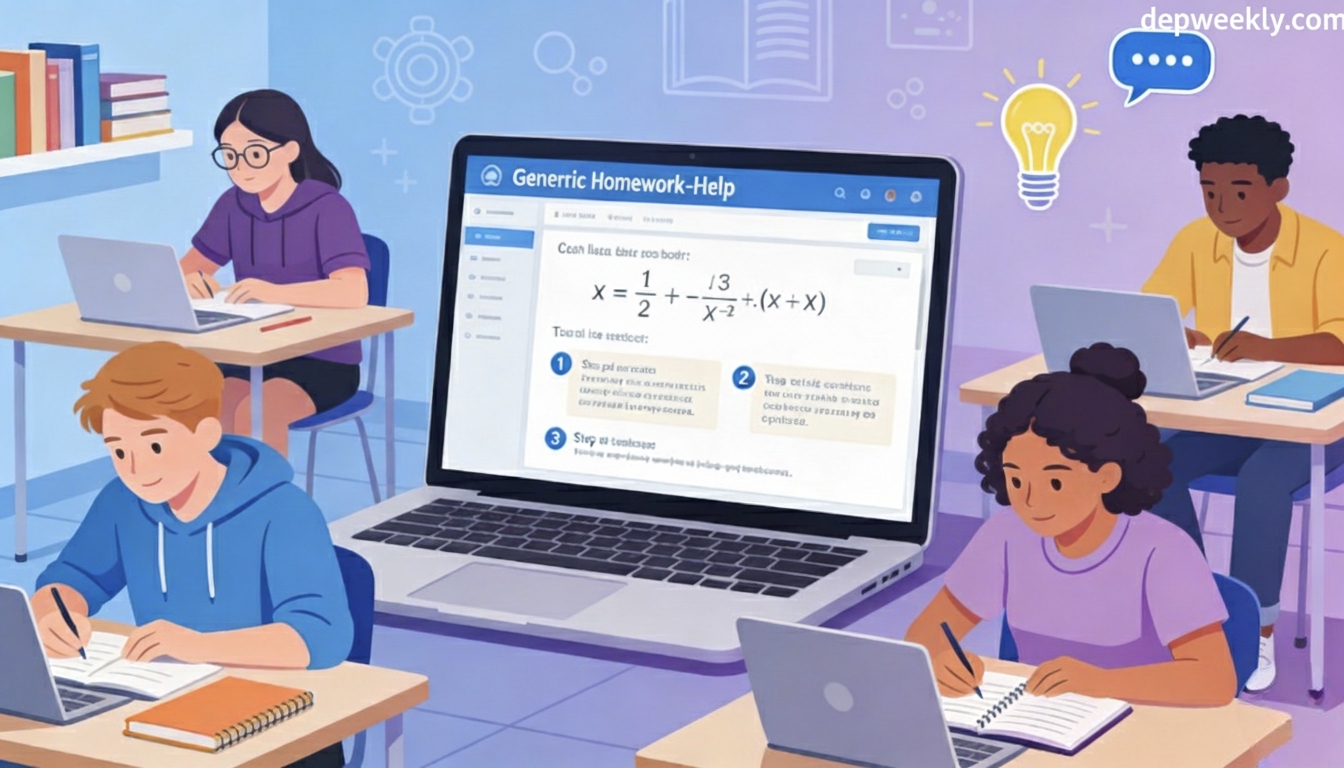
Homeworkify has become a buzzword among students who are tired of paywalls and long nights stuck on tough assignments. Many learners see it as a quick way to unlock answers from premium platforms or get instant, AI-powered help without paying. But before relying on Homeworkify for every problem set, it’s important to understand what it really is, how it works, and what risks come with it.

This guide breaks down Homeworkify in plain language so you can decide whether it fits your study style and your school’s rules. You’ll learn how Homeworkify operates, what features similar “homeworkify-style” tools offer, the legal and ethical concerns, and which safer alternatives can actually help you learn, not just copy. By the end, you’ll know how to use AI homework help in a way that supports your grades and your integrity.

What Is Homeworkify?

Homeworkify is commonly described as an AI-powered homework help platform that gives students solutions and explanations across multiple subjects, often by unlocking or mirroring answers from paid sites. Some versions of the service advertise free access to Chegg and Course Hero answers by letting users paste problem links and receive the solutions without a subscription. Other Homeworkify-branded tools present themselves as broader AI tutors that explain math, science, and writing topics step by step.

Will You Check This Article: DGH A: A Complete, Human‑Friendly Guide to Meaning and Uses

Because the Homeworkify name appears on several related domains, not every site works in exactly the same way, but the general promise is similar: instant answers, minimal cost, and AI assistance across many subjects. That mix of convenience and low price is what attracts students, but it’s also what raises concerns among educators and content owners.

Quick overview table

AspectHomeworkify-style platforms overview
Core purposeFast help with homework questions across subjects, often using AI. 1
Typical accessPaste question or link, then receive solution or explanation.
Cost claimFrequently advertised as free or very low-cost. ​
Main appealRemoves paywalls, saves time, and simplifies tough problems. 2
Main concernLegality, academic integrity, and over-reliance on quick answers. ​

How Homeworkify Works in Practice

At its core, Homeworkify works by accepting a question or a link from the user and then returning an answer, sometimes with steps or explanations. On some Homeworkify sites, students paste a link from platforms like Chegg or Course Hero, and the service attempts to fetch the hidden solution behind the paywall. On other implementations, users type the question directly, and AI tools analyze the text, search for relevant content, and generate a step-by-step response.

Under the hood, these services may combine several techniques: scraping existing solution databases, calling external AI models, and pulling from internal archives of previously solved problems. The end result looks straightforward from the student’s view—submit, wait a moment, and receive an answer—but the process can involve interaction with third-party content in ways that raise legal and ethical questions.

Key Features Students Care About

Many Homeworkify-style tools promote a similar feature set designed to make studying feel lighter and faster. Students usually encounter some of the following capabilities, depending on the specific site they use.

One widely advertised feature is instant question solving across subjects such as math, physics, chemistry, and more. Some platforms offer flexible input formats, allowing students to upload images of handwritten problems, attach files, or type questions directly into a chat-like interface. Others highlight personalized tutoring experiences, where AI breaks down concepts into smaller pieces rather than just dropping a final answer.

Another draw is cross-device access: many Homeworkify-branded apps or sites say they work on phones, tablets, and laptops so students can ask for help from anywhere. These services sometimes emphasize that they’re free or “non-profit,” positioning themselves as tools that democratize education by bypassing financial barriers. While that mission sounds noble, the way they accomplish it can create conflicts with content owners and institutions.newmedialaw.

Homeworkify vs Legitimate Homework Helpers

Because there are so many homework tools online now, Homeworkify is often compared with more established platforms. Looking at the differences can help you understand where Homeworkify sits in the broader landscape of study support tools.

Position of Homeworkify among other tools

FactorHomeworkify-type toolsMainstream paid helpers (e.g., Chegg)
Access modelOften promises free access to answers, including paywalled ones. Require paid subscription or pay-per-use for full solutions. ​
Content sourceMay scrape or mirror proprietary content plus AI-generated answers. Hosts licensed solution databases and expert-created content.
Legal positionQuestioned; some sites have been targeted by lawsuits. ​Operates under contracts and formal terms with content owners.
Education valueCan encourage copying if used only for final answers. mtoag+1​More structured learning, though still easy to misuse. undetectable+1​
ReliabilityQuality varies widely across domains and clones. homeworkify.us+1​More consistent quality and support. undetectable+1​

This is where things become complicated, and students need to be especially careful. Several reviews and legal analyses argue that Homeworkify, at least in some of its forms, is not safe or legal to use. One detailed review concludes that Homeworkify is a risky and unethical way to get answers, warning that it can damage academic reputation and expose users to malware or phishing attempt.​

There has also been legal action related to Homeworkify’s alleged scraping of Chegg’s proprietary content and sharing of paywalled answers. Court documents describe accusations that Homeworkify operators used stolen credentials and bots to access paid solutions, with one case even mentioning a denial-of-service attack connected to the dispute. While not every Homeworkify-branded site is necessarily run by the same people, the history around the name highlights serious concerns about both legality and trustworthiness.​

On the technical side, some domains associated with Homeworkify are considered low risk by certain security checkers, which means they don’t obviously host malware. However, the bigger issue is less about viruses and more about how the site handles copyrighted content, login details, and the ethics of bypassing paywalls.​

Academic Integrity and Ethical Concerns

Beyond the legal side, Homeworkify raises tough questions about academic integrity. Many schools and universities treat using unlicensed answer-sharing sites as a form of cheating, similar to using a hidden answer key during an exam. If you submit solutions taken directly from Homeworkify or similar services, you may violate your institution’s honor code, even if you never paid for those answers.

Ethical issues also appear when students rely on quick answers instead of genuine understanding. When you skip the learning process and simply copy, you may pass an assignment but struggle on tests, projects, and real-world tasks. In the long run, overusing sites that bypass paywalls trains your brain to look for shortcuts rather than building the skills you’ll need for higher education and work. That’s why many educators encourage using tools that explain concepts instead of ones that primarily unlock hidden answers.

When Homeworkify-Type Tools Can Help

Even with these concerns, the idea behind Homeworkify—fast, AI-assisted explanations and step-by-step guidance—can be genuinely helpful when used in the right way. Some Homeworkify-branded apps now focus more on being AI tutors, breaking down complex problems into digestible steps and providing concept breakdowns for math, science, and writing. When the emphasis is on understanding rather than copying, such tools can become part of a healthier learning workflow.

For example, if you’re stuck on a calculus derivative, an AI homework helper can walk through each step and show why a particular rule applies. Or if you’re writing an essay, an AI writing coach can suggest ways to improve structure and clarity without writing the paper for you. In these cases, the tool is acting more like a virtual study buddy or tutor, which many educators see as more acceptable—provided you’re also thinking critically and doing your own work.

Because of the legal and ethical issues around Homeworkify’s paywall-bypassing origins, many students look for safer alternatives that still provide strong academic support. Some alternatives focus on free educational content, while others combine AI explanations with licensed databases or human tutors.

Free resources such as large learning platforms, open course libraries, community-driven Q&A sites, and flashcard tools give students practice problems, explanations, and shared notes without the baggage of scraped content. On the paid side, established services like Chegg and other expert-answer platforms offer structured, verified solutions and tutoring for a monthly subscription or pay-per-use fee. Many of these tools now integrate AI features to provide faster step-by-step help while staying within legal boundaries.

How to Use Homeworkify Responsibly (If You Still Do)

Some students may still encounter Homeworkify-style tools, either through social media recommendations or search results, and choose to experiment with them. In that case, using them as a learning reference rather than a solution factory is crucial. Treat any answer you see as a starting point to understand the method, not a finished product to submit. Rewrite solutions in your own words, rework the steps, and verify the approach with textbooks or legitimate resources.

Another responsible practice is to avoid logging in with credentials from paid platforms or sharing personal account information with any site that promises to unlock premium content. Doing so can violate terms of service and expose you to serious privacy risks. If a tool feels shady, asks for passwords, or seems solely designed to bypass paywalls, it’s safer to step away and use something more transparent and trustworthy.

Building a Smarter Homework Strategy

Rather than depending entirely on Homeworkify, it’s more sustainable to build a blended homework strategy that uses multiple types of support. Start with your own attempt: lecture notes, textbooks, and class examples are still the best first line when tackling a new problem. If you get stuck, reach for concept-focused tools or official help channels such as your teacher’s office hours, tutoring centers, or approved online platforms.

AI homework helpers can then act as backup guides, clarifying steps or offering alternative explanations after you’ve tried on your own. This approach keeps you in control of your learning while still benefiting from technology’s speed and flexibility. Over time, you’ll rely less on instant answers and more on your own growing understanding, which pays off in exams, projects, and future career challenges.

Homeworkify’s Reputation and Future

Homeworkify’s reputation today is mixed: some students praise its convenience, while many reviewers and legal commentators criticize its methods and implications. Articles examining the service highlight its role in ongoing disputes over scraped content, injunctions, and domain seizures, which suggests that its future may depend heavily on legal outcomes and enforcement. At the same time, the rise of ethical AI tutoring tools shows that it is possible to offer powerful homework help without crossing those lines.

People also like this: Charfen.co.uk: Your Complete Guide to a Powerful Growth Platform

As AI tools mature, more platforms are emphasizing transparent explanations, concept mastery, and compliance with intellectual property rules. If Homeworkify or its successors want lasting trust from schools and students, they’ll need to align with these expectations and move away from paywall bypassing. Until then, cautious use and awareness of the risks remain essential for any student thinking about using a Homeworkify-branded site.

Conclusion

Homeworkify captures a powerful idea: homework help that’s fast, AI-driven, and accessible to anyone, regardless of budget. However, its history of scraping paywalled content, legal challenges, and mixed safety reviews show that not every implementation of Homeworkify lives up to that ideal in a responsible way. Students who rely blindly on such tools risk academic penalties, security problems, and a shallow understanding of the material.

The most sustainable path is to use AI homework helpers as learning partners rather than answer vending machines, while combining them with official resources, teachers, and legitimate platforms. When evaluating Homeworkify or any similar tool, ask whether it helps you truly understand your work, respects intellectual property, and fits within your school’s guidelines. If the answer is no, there are plenty of ethical alternatives that can support your growth without putting your integrity or future at risk.

Frequently Asked Questions (FAQs)

1. What is Homeworkify used for?

Homeworkify is used by students to get quick help with homework questions, often by generating AI-based solutions or unlocking answers from other platforms. It targets subjects like math, science, and writing with step-by-step explanations or direct answers.

2. Is Homeworkify legal to use?

The legality of Homeworkify is controversial, especially where it accesses or shares paywalled content from services like Chegg without permission. Legal reviews warn that such use can violate terms of service and infringe on proprietary material.

3. Can Homeworkify get you in trouble at school?

Yes, using Homeworkify to copy answers can breach academic integrity policies at many schools and universities. If your work is traced back to unlicensed solution-sharing tools, you could face penalties such as failing grades or disciplinary action.

4. Are there safer alternatives to Homeworkify?

There are many safer alternatives, including reputable tutoring platforms, licensed solution databases, and AI tools focused on explanations rather than paywall bypassing. Free learning sites and institutional resources can also provide trustworthy support without legal or ethical ambiguity.

5. How should students use Homeworkify-style tools responsibly?

If students choose to use Homeworkify-style tools, they should treat answers as references for understanding, not as work to submit directly. It’s important to avoid sharing account credentials, respect platform rules, and lean on tools that prioritize teaching over shortcutting.newmedialaw.

You May Also Read: Depweekly

Continue Reading

Trending

Copyright © 2025 DEPWEEKLY.COM