Blogs
Unsent Project: Exploring Unspoken Messages and Unfinished Ideas


Introduction
The phrase unsent project captures something deeply human: all the words we never said, the plans we never launched, and the ideas we kept quietly to ourselves. It can mean anonymous messages typed and deleted, creative work hidden in a folder, or even business initiatives that never made it past the planning stage. This article explores what an unsent project really is, why it matters in art, technology, business, and psychology, and how learning from what remains “unsent” can change the way you create, communicate, and grow.
What Is an Unsent Project?
At its core, an unsent project is any work, idea, or communication that remains unfinished, unpublished, or unshared with its intended audience. It could be a message saved in drafts, a concept document on your laptop, or a dream you’ve never spoken out loud.
Will You Check This Article: Orange Smudge on MacBook Pro Screen: Causes, Fixes, and When to Worry
In the digital world, the term unsent project is often linked to platforms that collect anonymous, unsent text messages and letters, especially about first love and relationships. At the same time, the phrase is now used more broadly as a metaphor for creative potential, emotional processing, and unrealized plans across many areas of life.
Key forms of unsent projects
- Digital unsent messages that live in apps, websites, or draft folders but are never delivered.
- Creative work like art, music, or writing kept private instead of being published or shared.
- Business or professional projects that reach planning or prototype stage but never officially launch.
- Personal goals, letters, or confessions that remain in journals instead of being spoken out loud.
The Unsent Project as a Digital Platform
One of the best-known uses of the term is The Unsent Project, an online art and message archive that collects anonymous unsent text messages to first loves. Started around 2015, it has grown into a huge collection of millions of messages from people across the world.
These messages range from declarations of love to apologies, confessions, and unresolved questions that were never actually sent. Many versions or companion apps let users search messages by name, color, or theme, turning private emotions into a shared digital experience.
Quick overview of The Unsent Project
| Aspect | Details |
|---|---|
| Core idea | Anonymous, unsent text messages, often to first loves. |
| Scale | Over 5 million messages collected in its archive. |
| Emotional structure | Messages categorized or explored by names, colors, and themes. |
| Purpose | A safe space to express feelings without sending them. |
This kind of unsent project shows how technology can channel emotions that might never fit into everyday conversations, yet still deserve a place to be expressed and witnessed.
Emotional Meaning Behind Unsent Messages
Every unsent project carries an emotional weight. Whether it’s a text you never sent or a voice memo you never shared, it usually represents feelings that were too risky, vulnerable, or complicated to fully express.
People often write unsent messages to process heartbreak, regret, gratitude, or closure on their own terms. On platforms designed for anonymous sharing, these messages become part of a collective emotional archive, letting strangers recognize themselves in each other’s hidden words.
Leaving messages unsent can be both comforting and painful. On one hand, it offers a private release without consequences; on the other, it may reinforce a sense of unfinished business or unresolved relationships.
The Creative Side of Unsent Projects
For artists, writers, and musicians, an unsent project might be a half-finished song, an abandoned draft of a novel, or sketches that never develop into a final piece. Creative work often goes through many stages, and not everything is meant to be shown to the world.
Perfectionism, fear of judgment, or a sense that “the timing isn’t right yet” can all keep projects in a private folder. Yet those hidden works often capture raw emotion, early experimentation, and ideas that could become foundations for future projects.
Why creators keep projects unsent
- The work feels too personal or vulnerable to share publicly.
- The creator feels the piece isn’t good enough or “ready.”
- Priorities shift, and new ideas replace older drafts, leaving them behind.
In creative industries, some of the most interesting breakthroughs emerge when people revisit these unsent projects years later, discovering that what once felt incomplete now holds surprising power.
Unsent Projects in Business and Work
In professional settings, an unsent project might be a product concept, campaign, or internal initiative that never launches. Teams may build prototypes, presentations, or business cases that ultimately stay inside a company drive.
Budget cuts, strategy changes, or market risks often stop these projects before they reach customers. However, the knowledge, data, and skills developed along the way still matter, even if the project remains unsent or shelved.
Organizations that treat unsent projects as learning assets instead of failures tend to extract more value from them. They revisit old plans, adapt them to new conditions, or use them as reference points when shaping new strategies and products.
Psychological Impact of Keeping Things Unsent
The concept of an unsent project also has strong psychological dimensions. For many people, writing an unsent letter or message acts as a form of emotional release or self-therapy. It allows them to say what they would never say face to face, without taking on the risk of a real confrontation or response.
On the positive side, this can provide clarity, reduce stress, and help someone understand their own feelings better. On the negative side, constantly avoiding expression might keep people stuck in cycles of rumination, regret, or imagined conversations.
Knowing whether an unsent project is helping you process emotions or holding you back is crucial. Sometimes a draft should stay private; other times, turning it into real action or communication is what ultimately brings closure.
Symbolism and Metaphor of the Unsent Project
Beyond literal apps and drafts, the unsent project has become a symbol in culture and storytelling. Writers, filmmakers, and therapists often use it as a metaphor for unspoken truths, deferred dreams, and hidden potential.
An unsent project can represent a life path never taken, a relationship that exists only in “what if” scenarios, or talents left unexplored. This symbolism resonates because most people can recall at least one moment when they chose silence instead of speech, or hesitation instead of action.
By framing these experiences as unsent projects, people gain a language for reflecting on their own choices without necessarily labeling them as mistakes. It becomes a way to acknowledge that not everything has to be finished or shared to have meaning.
Benefits of Leaving Projects Unsent
Although unsent projects can feel like missed opportunities, they also offer unique benefits in both personal and professional contexts. Keeping certain drafts or ideas private can create a safe space to experiment, reflect, and grow.
When there’s no pressure to publish, people often allow themselves to be more honest, messy, and experimental. This can lead to creative breakthroughs, deeper self-awareness, and a better understanding of what truly matters before making anything public.
Unsent projects also act as emotional buffers. Someone might write out an angry message, read it back, and decide not to send it, thereby avoiding damage to a relationship while still processing the emotion.
Challenges and Risks of Unsent Projects
Despite the advantages, unsent projects come with real challenges. The biggest is a lingering sense of incompleteness, which can translate into frustration or self-doubt.
If too many ideas stay unsent, people may start believing they can’t follow through, which affects confidence and motivation. In organizations, keeping projects permanently on hold can waste time, resources, and morale as teams invest effort that never reaches an audience.
There’s also the emotional weight of never saying what you truly feel. In some cases, choosing to send a message, publish a piece, or launch a project becomes an important step in healing or progress, especially when silence has lasted for years.
Unsent Project in Apps, Social Media, and Trends
The idea of the unsent project has spread widely across social platforms. Many creators share content where they read or react to anonymous unsent messages, especially in short-form videos. Hashtags around unsent messages and unsent project-style content encourage users to submit their own confessions or reflections, often framed against emotional music or visuals.
Apps inspired by the unsent project format provide features like searching messages by name, filtering by topic or emotion, and browsing anonymous confessions organized into categories such as love, regret, friendship, or family. This turns individual unsent experiences into a form of community storytelling where patterns of human behavior, heartbreak, and hope become visible at scale.
Deciding Whether to Send or Keep Unsent
One of the most important questions around any unsent project is whether it should stay private or finally be released. There’s no universal rule, but several guiding questions can help.
People can start by asking what they want to achieve by sending or sharing. If the purpose is clarity, healing, or genuine connection, sending may be worthwhile; if it’s mainly to provoke, hurt, or win an argument, keeping it unsent might be wiser.
It also helps to consider readiness and boundaries. Is the project emotionally and practically ready to be seen by others, and is the creator prepared for possible reactions or consequences? Honest answers to these questions make the decision more grounded and less impulsive.
Simple decision-check framework
- Purpose: What outcome is hoped for by sending or publishing?
- Impact: Who could benefit or be harmed, including you?
- Readiness: Is the message or project in a state you accept, even if imperfect?
- Boundaries: Are you comfortable owning or discussing it if someone responds
How to Work With Your Own Unsent Projects
Instead of ignoring unsent projects, many people find value in revisiting them regularly. Reading old drafts, voice notes, or plans can reveal patterns in what you consistently avoid or delay.
Some use them as raw material, transforming unsent letters into poetry, fiction, or personal essays. Others turn abandoned business presentations into training materials, internal playbooks, or updated strategies for new markets. In both cases, the unsent project becomes a starting point, not a dead end.
You can also intentionally create unsent projects as a method: for example, writing unsent letters during therapy or coaching, or sketching product ideas without any pressure to ship them. With this mindset, “unsent” becomes part of a healthy cycle between private reflection and public action.
Unsent Project Across Different Life Areas
Because the phrase unsent project is so flexible, it fits multiple life domains:
People also like this: High Risk Merchant Account at HighRiskPay.com: Complete Guide for Risky Industries
- In relationships, it’s unsent texts, emails, or letters that hold all the feelings left between people.
- In creativity, it’s drafts, demos, and concepts that never see a stage or a gallery.
- In careers, it’s pitches, proposals, and ambitious plans stored away on drives and notebooks.
- In personal development, it’s written reflections and goals that shape identity even if they’re never shared.
Treating all of these as unsent projects emphasizes that they still matter. They’re not failures by default; they’re snapshots of who someone was at a particular moment, carrying insights that can guide who they become next.
Conclusion
The unsent project is more than just a collection of anonymous messages or drafts sitting in a folder. It’s a powerful idea that touches everything from our deepest feelings to our boldest plans, reminding us that even the things we never send or finish can shape us in meaningful ways.
Understanding your own unsent projects—what you hold back, why you hesitate, and how you process unspoken thoughts—can turn quiet regrets into valuable lessons. Some unsent messages are meant to stay private, protecting your boundaries and providing space for reflection; others deserve to eventually be spoken, shared, or built into something new. Learning to tell the difference helps you move forward with more honesty, courage, and intentionality in relationships, creativity, and work.
Frequently Asked Questions (FAQs)
1. What does “unsent project” mean?
The term unsent project usually refers to messages, ideas, or works that are created but never delivered or released to their intended audience. It can be a literal text left in drafts or a metaphor for unfinished goals and unspoken thoughts.
2. Is The Unsent Project a real platform?
Yes, The Unsent Project is a real digital project and message archive that collects anonymous unsent text messages, often written to first loves. People can browse messages, search by name, and explore the emotional stories behind them.
3. Why do people keep messages or projects unsent?
People keep things unsent for many reasons, including fear of rejection, desire for privacy, or uncertainty about timing. Writing without sending also helps them process emotions safely before deciding whether to act.
4. Are unsent projects always a bad thing?
Unsent projects aren’t automatically negative; they often serve as private spaces for experimentation, reflection, and emotional release. Problems arise only when holding back becomes a pattern that blocks necessary communication or growth.
5. How can I decide whether to send or share something?
Start by clarifying your purpose, considering who might be affected, and checking if you feel emotionally ready for any response. If sending aligns with your values and supports genuine understanding or progress, it may be worth moving the project from unsent to shared.
You May Also Read: Depweekly

Key Takeaways:
- Regular tree maintenance enhances property value and community well-being.
- Proper watering, fertilization, and mulching are essential for tree health.
- Engaging certified arborists ensures professional care and safety.
Importance of Tree Care in Habersham County
The vibrant landscapes of Habersham County depend on healthy, well-managed trees. Not only do thriving trees enrich aesthetic appeal, but they also play a critical role in property value, air quality, and the local ecosystem. A robust canopy can boost home values by up to 15 percent, improve air quality by capturing pollutants, and help cool your property during the hot Georgia summers. Proactive care, such as routine inspection and timely intervention, supports long-term tree vitality.
Partnering with a reputable tree removal company in Habersham County, GAis an effective way to maintain the beauty and health of your landscape. McKay Tree Service, renowned for its expert-certified arborist services, is a trusted leader serving areas such as Cornelia, Clarkesville, Baldwin, and Demorest. Their team offers a full spectrum of care, from emergency tree removal to routine health evaluations, earning a reputation as a community authority on tree maintenance and safety.
Effective Watering Techniques
Consistent, deep watering is key to developing strong roots, especially for younger or newly planted trees. The warm climate in northeast Georgia, paired with occasional dry spells, means that trees must receive moisture to a depth of at least 10 to 12 inches. Use a slow and steady approach, such as a soaker hose or drip irrigation, to ensure the soil is evenly saturated without runoff. Overwatering, however, can contribute to root rot and fungal disease, so always check soil moisture before adding water.
Established trees require less frequent but still intentional watering, mainly during extended droughts. Focus watering under the drip line, the outermost circumference of the tree branches, where fine roots actively absorb moisture. Use mulch to help retain soil moisture and reduce evaporation, supplementing your efforts to keep trees hydrated during the hottest parts of the year.
Fertilization Practices for Optimal Growth
Fertilization replenishes essential soil nutrients, supporting new growth, improving resilience to pests and diseases, and fostering a robust root system. Begin by using a soil test kit to determine your trees’ specific needs, including nutrient levels and pH balance. In Georgia, the ideal times to apply fertilizer are typically late fall or early spring, outside the peak growing season, to reduce the risk that tender new growth will succumb to unexpected frosts or drought.
Avoid excessive fertilization, especially late in the summer. Overapplication can create unnecessary stress and may harm both the tree and its surrounding environment. When in doubt, contact your local extension office or a certified arborist for tailored recommendations.
Benefits of Proper Mulching
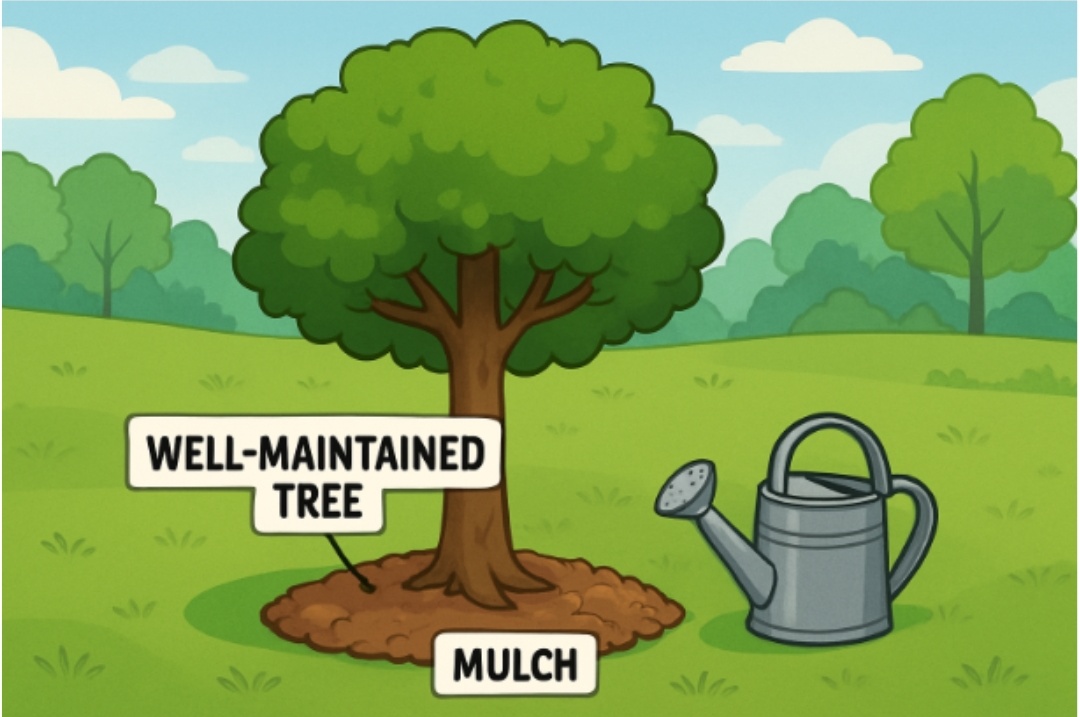
Mulching is one of the simplest and most effective practices for healthy trees. Organic mulch, such as pine straw or wood chips, helps conserve moisture, reduce soil temperature fluctuation, and suppress weeds. Apply a layer about 2 to 4 inches deep, keeping mulch pulled back a few inches from the trunk to discourage pests and avoid rot. The mulch ring should extend out as far as the tree’s drip line for maximum benefit.
Proper mulching not only supports the tree’s root zone but also improves soil structure as organic materials break down over time. This enriches the soil with beneficial microorganisms, fostering an environment in which trees can thrive.
Pruning Guidelines for Healthy Trees
Strategic pruning removes dead, diseased, or structurally unsound branches, improving air circulation and light penetration. Prune most species during the dormant season (late winter), when trees are less vulnerable to pest infestation and disease. Use sharp, sterilized tools and make clean, angled cuts just outside the branch collar, avoiding flush cuts that can hinder healing.
Never remove more than 25 percent of a tree’s canopy in a single season, as excessive pruning can cause undue stress and disrupt the tree’s natural balance. If pruning involves large limbs or is above shoulder height, it is safest to call in a professional.
Seasonal Maintenance Tips
Each season brings distinct opportunities and challenges to tree care. In spring, check for signs of winter injury and refresh mulch rings. Monitor for emerging pests and address disease symptoms early during the vibrant summer months. Fall is the optimal time to plant new trees and a great opportunity to add nutrients before winter sets in. In winter, conduct corrective pruning to shape and invigorate trees before active growth resumes.
A systematic maintenance schedule not only maximizes tree health but also minimizes potential risks such as storm damage and disease outbreaks. Cultivating a year-round care routine builds a resilient urban canopy that benefits homeowners and the broader community alike.
Engaging Certified Arborists
Complex tree issues, from advanced pruning to disease diagnosis, are best handled by certified arborists. These professionals have the technical knowledge and hands-on experience to identify threats, recommend effective treatments, and ensure the long-term welfare of your trees.
Reaching out to a trusted local specialist enhances the safety and success of larger tree care projects. It also ensures compliance with any county regulations regarding protected species or removal permits.
Frequently Asked Questions
Q: How often should I water my trees during the summer?
A: Young trees benefit from deep watering once a week. Established trees may need supplemental watering during prolonged hot spells.
Q: When is the best time to prune my trees?
A: Late winter, while trees are dormant, is generally the best pruning window for most species.
Q: How can I tell if my tree is healthy?
A: Healthy trees feature full, vibrant canopies with rich green leaves and no visible signs of disease or infestation. Regular inspection helps catch issues early.
Q: Is hiring a certified arborist necessary?
A: For complicated or large-scale tree care, certified arborists bring valuable expertise. Homeowners can perform basic maintenance, but professionals ensure long-term health and safety.
Conclusion
Maintaining healthy trees in Habersham County requires consistent care, including proper watering, fertilization, mulching, and seasonal pruning. Establishing a routine and monitoring tree health helps prevent disease, storm damage, and long-term decline. For complex tasks or larger trees, engaging certified arborists ensures expert guidance, safety, and compliance with local regulations. By combining proactive maintenance with professional support, homeowners can cultivate vibrant, resilient landscapes that enhance property value and the community’s natural beauty.


In the bustling heart of Singapore’s northeast, where families juggle school runs, work commutes, and weekend errands, finding the right tuition centre can feel like searching for a needle in a haystack. But tucked away in Woodleigh Mall, there’s a spot that’s been turning heads for all the right reasons. It’s not just another cram school; it’s a place where kids actually look forward to learning. So, what sets the best tuition centre here apart from the rest? Let’s dive in and explore why choosing it could be one of the smartest decisions you make for your child’s education.
Prime Location for Everyday Convenience
First off, location matters more than you might think. Woodleigh Mall isn’t some far-flung outpost—it’s right smack in the middle of a vibrant neighborhood, connected seamlessly to the Woodleigh MRT station. Imagine this: you drop off your kid for a math session, grab a quick coffee at the mall’s cozy cafes, or even squeeze in some grocery shopping at the supermarket downstairs. No more battling peak-hour traffic or wasting precious time on long drives. Parents I’ve chatted with rave about how this convenience turns what could be a stressful afternoon into a smooth, productive one. It’s like the centre was designed with real-life family schedules in mind, making education fit into your day rather than the other way around.
Dedicated and Experienced Educators
But convenience alone doesn’t cut it. What really elevates this tuition centre is its team of educators. These aren’t your run-of-the-mill tutors fresh out of uni; they’re seasoned pros with years of experience under their belts. Many hold advanced degrees from top institutions like NUS or NTU, and they’ve got a knack for making complex subjects feel approachable. Take Mrs. Lim, for instance—a biology whiz who’s been teaching here for over a decade. She doesn’t just lecture; she brings lessons to life with hands-on experiments and real-world examples. One parent shared a story about how their daughter, who once dreaded science classes, now dreams of becoming a doctor thanks to Mrs. Lim’s infectious enthusiasm. It’s this personal touch that builds confidence in students, turning “I can’t” into “I got this.”
Innovative and Tailored Curriculum
Of course, great teachers need a solid curriculum to back them up. The best tuition centre in Woodleigh Mall stands out with its tailored programs that align perfectly with Singapore’s MOE syllabus, but they go beyond rote learning. They incorporate interactive methods like group discussions, tech-aided simulations, and even gamified quizzes to keep things engaging. For secondary students prepping for O-Levels or A-Levels, there’s a focus on critical thinking and problem-solving—skills that exams love to test but schools sometimes skim over. Primary kids get a gentler approach, with fun activities that build foundational skills without overwhelming them. And here’s a cool twist: they offer specialized tracks for subjects like English, where creative writing workshops help kids express themselves better, or math, where visual aids demystify tricky concepts like algebra. It’s not about drilling facts; it’s about fostering a love for learning that sticks long after the session ends.
Modern Facilities and Safe Environment
Facilities play a big role too. Walking into the centre feels welcoming, not intimidating. Classrooms are bright and airy, equipped with modern tools like interactive whiteboards and comfortable seating that doesn’t make kids fidget after 10 minutes. There’s even a quiet study lounge where students can review notes or tackle homework between classes. During breaks, they can unwind in a small recreational area with books and puzzles—nothing fancy, but it beats staring at walls. Safety-wise, everything’s top-notch: CCTV coverage, strict hygiene protocols post-pandemic, and staff trained in first aid. One mom mentioned how reassuring it was to know her child was in a space that prioritized well-being as much as academics. In a city where space is at a premium, this centre maximizes every square foot to create an environment that’s conducive to focus and fun.
Proven Results and Personalized Attention
Now, let’s talk results because, at the end of the day, that’s what parents care about most. The track record here is impressive, with students consistently outperforming national averages in key exams. Last year alone, over 80% of their O-Level cohort scored A1 or A2 in math and science—numbers that speak volumes. But it’s not just about grades; it’s about holistic growth. Alumni stories abound: a boy who struggled with dyslexia now thriving in junior college, or a girl whose improved English skills landed her a spot in a prestigious debate team. These successes aren’t accidents; they’re the fruit of personalized attention. Class sizes are kept small—usually 8 to 12 students per session—so tutors can spot weaknesses early and address them. Regular progress reports keep parents in the loop, and if a kid needs extra help, there’s flexible one-on-one coaching without the hefty price tag.
Affordable Fees with Community Support
Affordability is another feather in its cap. Tuition fees in Singapore can skyrocket, but this centre keeps things reasonable without skimping on quality. Monthly rates start from around $200 for primary levels, scaling up based on subject and intensity, with discounts for siblings or long-term enrollments. They even run trial classes for free, so you can test the waters before committing. Compared to big-name chains charging double for similar services, it’s a steal. And get this: they offer scholarships for deserving students from lower-income families, showing they’re invested in the community, not just profits. It’s refreshing to see a business that balances excellence with accessibility.
Strong Community Ties and Adaptability
Speaking of community, this tuition centre isn’t an island unto itself. It’s deeply rooted in Woodleigh’s local scene, partnering with nearby schools for workshops and even hosting free seminars on topics like exam stress management or career guidance. During holidays, they run enrichment camps that blend learning with outings to places like the Science Centre. This integration fosters a sense of belonging, where kids make friends and parents network. In a fast-paced city like ours, where isolation can creep in, these connections matter. One father told me how his son’s involvement in a group project here sparked lasting friendships that extended beyond the classroom.
All that said, no place is perfect, and this centre knows it. They actively seek feedback through surveys and parent-teacher meetings, tweaking programs based on what works and what doesn’t. It’s this adaptability that keeps them ahead in an ever-changing education landscape. With the rise of online learning, they’ve blended in virtual options for those rainy days or when travel’s a hassle, ensuring continuity without missing a beat.
Why It’s a Smart Investment for Your Child’s Future
In wrapping up, choosing the best tuition centre in Woodleigh Mall isn’t just about boosting grades—it’s about investing in a brighter future. Its prime location, dedicated teachers, innovative curriculum, top facilities, proven results, fair pricing, and community spirit make it a standout choice. If you’re a parent pondering the next step for your child’s education, why not swing by and see for yourself? You might just find it’s the missing piece in your family’s puzzle. After all, in the game of learning, having the right support can turn potential into achievement.

Shipping a motorbike may be easily and stress-free done by relocating, selling it, or going on a long-distance excursion. Good planning is, however, absolutely necessary to ensure your bike gets safely, on schedule, and without unexpected costs. Following wise planning methods can have a major influence whether you are shipping internationally or locally. Practical and verified recommendations to assist you get your motorcycle ready for shipping properly are provided below.
1. Select the Best Shipping Method
Pick first the transportation option best suited for you. Closed transit typically less expensive and frequently used; open transportation offers more defense against road dust, dirt, and weather. For expensive, classic, or custom bikes, closed shipping usually presents the preferable choice. Reputable Motorcycle Transport Companies can help you compare these options and select the best solution based on distance, budget, and bike type.
2. Completely clean the motorbike
Cleaning your bike before shipment is a wise step rather than just for appearances. A clean bike before moving one helps one to spot any scratches, dings, or mechanical difficulties. Dirt and filth could disguise damage that could later be passed for shipping-related. Take several crisp shots from several perspectives following cleaning to record the before-ship state of your motorcycle.
3. Do a fundamental mechanical check
Check your motorcycle for loose bolts, mechanical problems, and any fluid leaks. Preempting little problems could help to avoid major ones on travel. Most shipping firms demand that the fuel tank be one-quarter full at most in order to lower fire risk and weight. Examine the battery as well; some operators may demand that you cut it depending on transport rules.
4. Fix or Get Rid of Loose Accessories
Saddlebags, mirrors, GPS units, phone mounts, or custom add-ons ought to be taken off or firmly fixed. Loading and unloading can damage, get lost, or break loose objects. Should removal not be possible, let the shipping business ahead of time know and record these products on the condition report.
5. Turn off alarms and accurately lock steering
Should your bike include an alarm system, turn it off before shipping. During travel, alarms can deplete the battery or cause problems. Unless your carrier particularly instructs otherwise, the steering should be opened so that handlers may safely negotiate the bike. To prevent delays, always abide by the transporter’s instructions.
6. Get to know insurance coverages
Never believe perfect coverage without looking at the specifics. Inquire of the shipping company what their insurance covers, exclusions, and limitations are. If your motorcycle is especially expensive, you might wish to buy extra insurance for peace of mind. Save your condition images and the insurance policy until delivery is finished.
7. Gather the necessary paperwork
Make sure your ownership documents, shipping agreements, and identification are all prepared. Additional customs documentation might be necessary for international deliveries. Organizing documents ahead of time avoids last-minute anxiety and delivery problems.
8. Organize Pickup and Delivery Wisely
Should it be at all feasible, be adaptable with pickup and delivery dates; Typically, this lowers costs and ensures more effective logistical management. Give delivery dates and check whether the service is door-to–door or terminal-to-terminal. Avoiding misinterpretation calls for being present or designating a dependable person at both ends.
9. Look Upon Arrival
Examine your bike thoroughly before signing the delivery receipt after it arrives. Contrast its state with your pre-shipping images. Should you see any damage, let it right away and photograph it. For insurance claims, prompt reporting is essential.
Last Notes
Good ready starts Safe and trouble-free motorbike transport. Cleaning your bike, fixing attachments, knowing insurance, and picking the most practical mode of transportation help you to greatly lower unplanned costs and hazards. Some effort goes a long way in making certain your motorcycle comes back in the same condition it left—ready for the next road.

Tree Care Practices for Habersham County, GA: Practical Tips for a Healthy Landscape

How to Find the Top-Rated Drug Lawyer in Delaware County, PA

What Makes the Best Tuition Centre in Woodleigh Mall a Smart Choice

Бишкоти ди Прато: The Crunchy Heart of Italian Biscotti

тщквыекщь: Meaning, Concept, Use, and Digital Relevance
